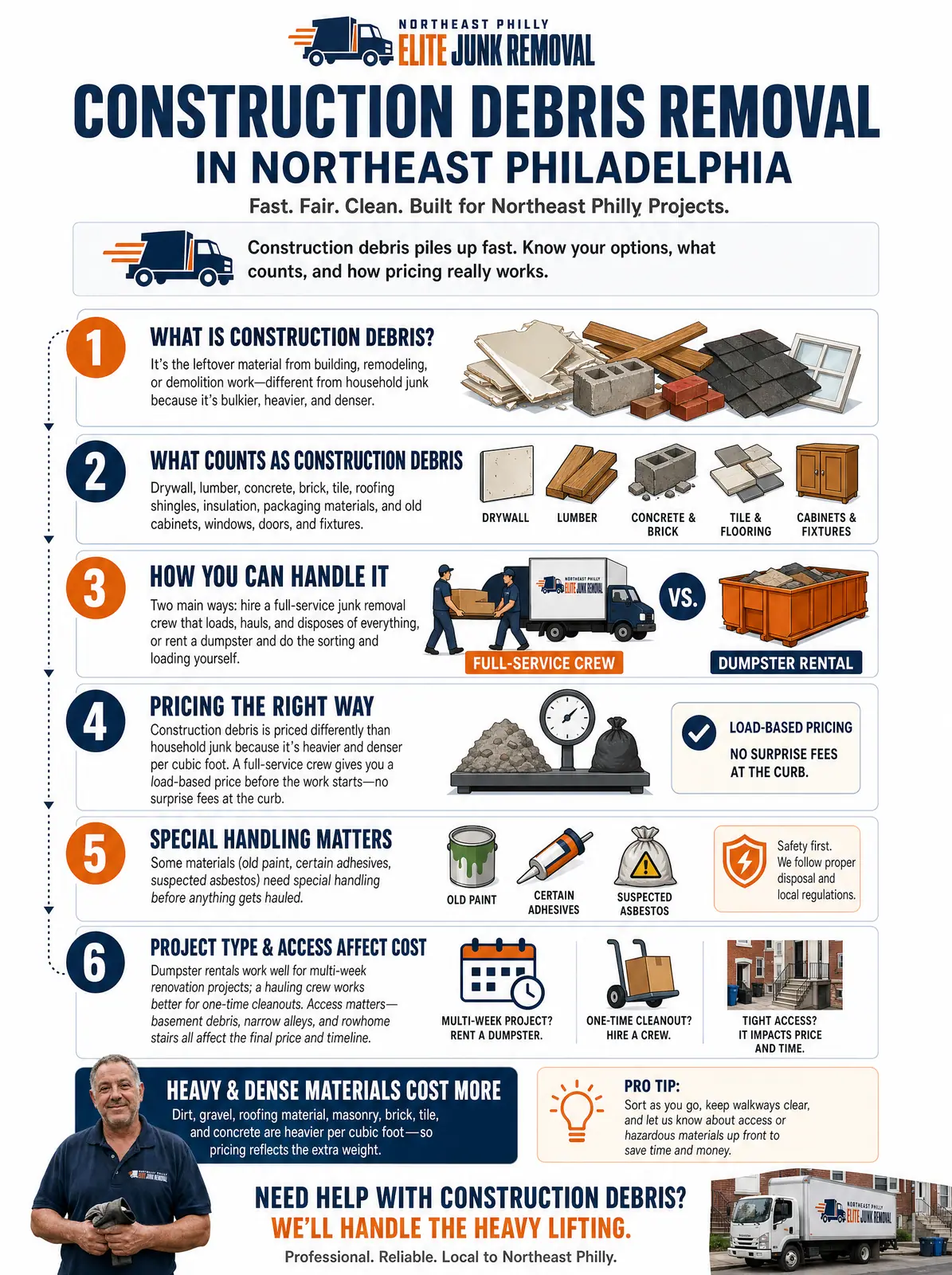
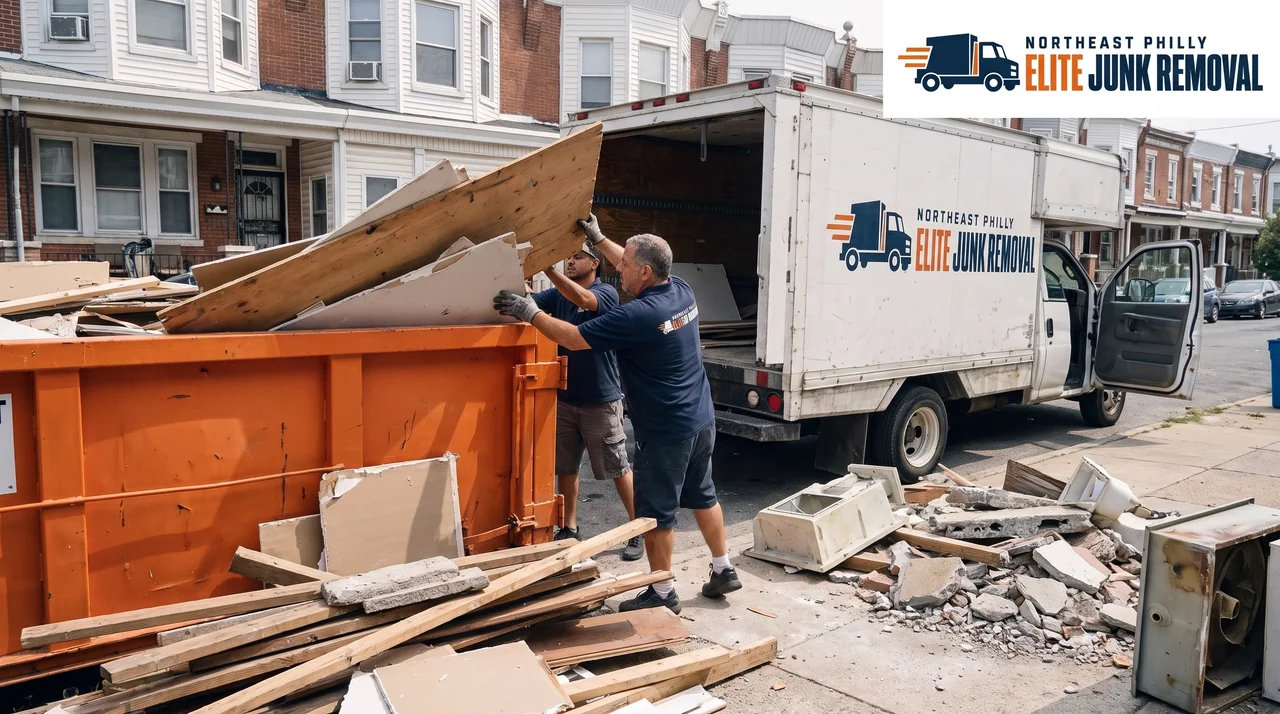
Construction debris removal is the hauling and disposal of materials left over from building, remodeling, or demolition work — drywall, lumber, concrete, roofing, tile, and old fixtures. In Northeast Philadelphia, you can handle it two ways: hire a full-service junk removal crew that loads, hauls, and disposes of everything, or rent a dumpster and do the sorting and loading yourself.
Construction debris is priced differently than household junk because it’s heavier and denser per cubic foot.
A full-service crew gives you a load-based price before the work starts — no surprise fees at the curb.
Some materials (old paint, certain adhesives, suspected asbestos) need special handling before anything gets hauled.
Dumpster rentals work well for multi-week renovation projects; a hauling crew works better for one-time cleanouts.
Access matters — basement debris, narrow alleys, and rowhome stairs all affect the final price and timeline.
What Counts as Construction Debris
Construction debris covers anything left over from a renovation, remodel, repair, or demolition project. It’s different from household junk because it’s typically bulkier, heavier, and denser.
Drywall and sheetrock scraps
Lumber and wood cut-offs
Concrete, brick, and masonry
Tile, flooring, and roofing shingles
Insulation and packaging materials
Old cabinets, windows, doors, and fixtures
Some of these fall into the “heavy/dense” category — dirt, gravel, roofing material, masonry, brick, tile, and concrete. These materials weigh far more than their volume suggests, which is why they’re a bigger factor in pricing than lighter debris like drywall or wood scraps.
Materials That Need Special Handling
Not every piece of construction debris can go into a standard mixed load. Materials that may contain asbestos, lead paint, or hazardous chemicals need to be identified and handled separately, since they can’t be disposed of the same way as ordinary debris.
This matters especially in Northeast Philadelphia, where many rowhomes and older properties were built decades before current building materials were standard. If your project involves demolition in an older home, it’s worth checking with a contractor or the City of Philadelphia about what’s in the walls or flooring before removal begins.
Your Options for Removing Construction Debris
Once debris is piled up, you generally have two paths: rent a dumpster and do it yourself, or hire a crew to load and haul it for you. Each fits a different type of project.
DIY: Renting a Dumpster or Hauling It Yourself
A roll-off dumpster gets dropped at your property, and you fill it at your own pace over the course of the project. This works well for longer renovations where debris accumulates over days or weeks.
The trade-off is that you do the sorting and loading, and placing a dumpster on a public street in Philadelphia may require a city permit. Weight limits and overage fees are also common — go over the dumpster’s rated weight and you’ll usually pay extra, especially with heavy materials like concrete or roofing. Self-hauling to a transfer station adds the cost of a truck, your own labor, and the time to make repeat trips.
Hiring a Junk Removal or Hauling Service
A full-service crew arrives, loads the debris, hauls it away, and sweeps up before leaving — you don’t lift anything. This fits homeowners, landlords, realtors, and small businesses who want the debris gone without renting equipment or making transfer station runs themselves.
Pricing for this option is usually volume-based, meaning you pay for the space your debris takes up in the truck rather than a flat dumpster rental fee. You can browse our junk removal services to see the full range of what a crew typically handles beyond construction debris, including furniture, appliances, and full property cleanouts.
DIY vs. Full-Service: How to Choose
Neither option is universally better — it depends on your project timeline and how much labor you want to take on.
Situation
Better Fit
Multi-week renovation with debris building up over time
How Construction Debris Removal Works, Step by Step
The full-service process is straightforward, whether the debris is from a kitchen remodel, a bathroom gut, or a small demolition job.
Get a price based on the volume of debris — described over the phone, through photos, or with an on-site look.
Schedule a pickup window that fits your project timeline.
The crew arrives, loads the debris, hauls it away, and sweeps the area clean.
This applies to most reputable haulers in the area, not just one provider — the steps stay the same whether it’s a small pile of drywall or a full basement gut.
What It Costs to Remove Construction Debris
Construction debris is typically priced two ways: by dumpster size for DIY rentals, or by load volume for full-service hauling. The two biggest cost drivers are the number of trips required and how much heavy, dense material is in the load — concrete, brick, tile, and masonry weigh far more than the same volume of wood or drywall.
Here’s an example of how load-based pricing works, using a standard rate structure:
Load Size
Starting Price
Capacity (up to)
1/8 Truck Load
$150
375 kg
1/4 Truck Load
$275
750 kg
1/2 Truck Load
$395
1.5 tons
3/4 Truck Load
$525
2.25 tons
Full Truck Load
$695
3 tons
These are starting prices, and the final number should always be confirmed with a free, no-obligation on-site estimate rather than a phone guess. You can see our junk removal pricing for the full breakdown of what’s included at each load size.
What Affects the Final Price
A few variables move the price up or down from the starting rate:
Total volume of debris — how much space it takes up in the truck
Weight and density of materials — concrete, brick, and tile add up fast
Accessibility — basement debris, narrow rowhome stairs, or tight alley access take more time to load
Number of trips needed if the debris exceeds one truckload
Where Construction Debris Goes: Disposal and Recycling
Not everything pulled from a renovation ends up in a landfill. Clean wood, metal, cardboard, and concrete can often be recycled or diverted, and a responsible hauler routes material to a permitted transfer station or recycling facility rather than the nearest dumpster. Metal fixtures, old appliances pulled during a remodel, and scrap wood are common examples of debris that gets separated out before disposal rather than sent straight to landfill.
Rules and Permits to Know in Philadelphia
Construction debris can’t legally go out with regular curbside trash in most cases — it has to be transported by a licensed waste hauler to a permitted facility. If you’re renting a dumpster and placing it on a public street rather than a driveway, the City of Philadelphia may require a permit for that placement. Requirements can change, so it’s worth confirming current rules directly with the city before your project starts, especially for larger renovation or demolition jobs.
How to Prepare for a Construction Debris Pickup
A little prep work makes the pickup faster and keeps your quote accurate:
Separate out anything suspected of containing asbestos, lead paint, or hazardous chemicals before the crew arrives
Keep the debris pile in one accessible area rather than scattered across the property
Clear a path from the debris to the truck or driveway — stairs and tight alleys slow down loading
Take a few photos or give an accurate description when requesting your quote, so the on-site estimate matches what you expected
Getting Construction Debris Hauled in Northeast Philadelphia
Northeast Philly Elite Junk Removal handles construction debris removal across Northeast Philadelphia and nearby Bucks and Montgomery County suburbs, including Mayfair, Bustleton, Holmesburg, and Fox Chase. Pricing is upfront and load-based, with same-day and next-day pickup windows where available. The company is locally owned and run by meet owner Mike Sullivan, who brings 20 years of junk-removal experience to every job.
Have drywall, lumber, or concrete piling up from a renovation? Call Now — (215) 608-6297 for a free, no-obligation on-site estimate, or request a quote through the site for junk removal in Northeast Philadelphia.
Frequently Asked Questions
Can I put construction debris in my regular trash?
No. Most municipal trash pickup does not accept construction or renovation debris, especially in any real volume. It needs to go through a licensed hauler or a dumpster rental to a permitted disposal facility.
What’s the difference between construction debris and regular junk?
Construction debris comes from building, remodeling, or demolition work — drywall, lumber, concrete, tile — and is generally heavier and denser than household junk like furniture or boxes. That density is a bigger factor in pricing and disposal than it is for typical junk removal.
Do you take heavy materials like concrete, brick, and roofing?
Many full-service haulers accept heavy, dense materials, but they affect the price because of weight limits and the number of trips needed to move them. Confirm with your hauler before the job so there are no surprises.
How much construction debris fits in a truck load?
Truck capacity is measured by load size, from an 1/8 load up to a full truck load. With heavy materials like concrete or brick, the weight limit is often reached before the truck looks full, which is why density matters as much as volume.
How fast can construction debris be removed?
Full-service junk removal often offers same-day or next-day pickup, depending on availability and how much debris there is. A DIY dumpster rental, by comparison, usually sits on the property for days or weeks while you fill it.
Do I need a permit to remove construction debris in Philadelphia?
Licensed haulers handle the transport and disposal side without the homeowner needing a permit. If you’re placing a dumpster on a public street rather than your own driveway, though, the city may require a placement permit — check current requirements with the City of Philadelphia before scheduling delivery.
For more common questions about the process, see our frequently asked questions page. Whether you go the DIY route or hire a crew, getting a clear price before the work starts is the single best way to avoid surprises. If you’d rather skip the dumpster and the labor, call (215) 608-6297 or get a free quote for your next cleanout.
Mike Sullivan is the founder and owner-operator of Northeast Philly Elite Junk Removal. Born and raised in the Northeast, Mike brings 20 years of junk-removal and hauling experience to every job. He started his own crew after years on the trucks, and he still runs every quote himself and rides along on cleanouts across Mayfair, Bustleton, Somerton, Torresdale, Holmesburg, Fox Chase, and Rhawnhurst. His approach is simple and no-BS: give you the full price up front, show up in a real arrival window, and haul it all away — donating and recycling whatever can be saved before anything goes to the landfill. When you call, you get Mike, not a national call center.